What an Inspection Looks For
The unglamorous routine that keeps a timber structure standing
Moisture, section loss and connections. The unglamorous routine that keeps a timber structure standing.
A covered bridge inspection is not a scenic walk-through. It is a systematic search for moisture, section loss, and failed connections — the three conditions that, left unattended, turn a sound timber frame into a liability.
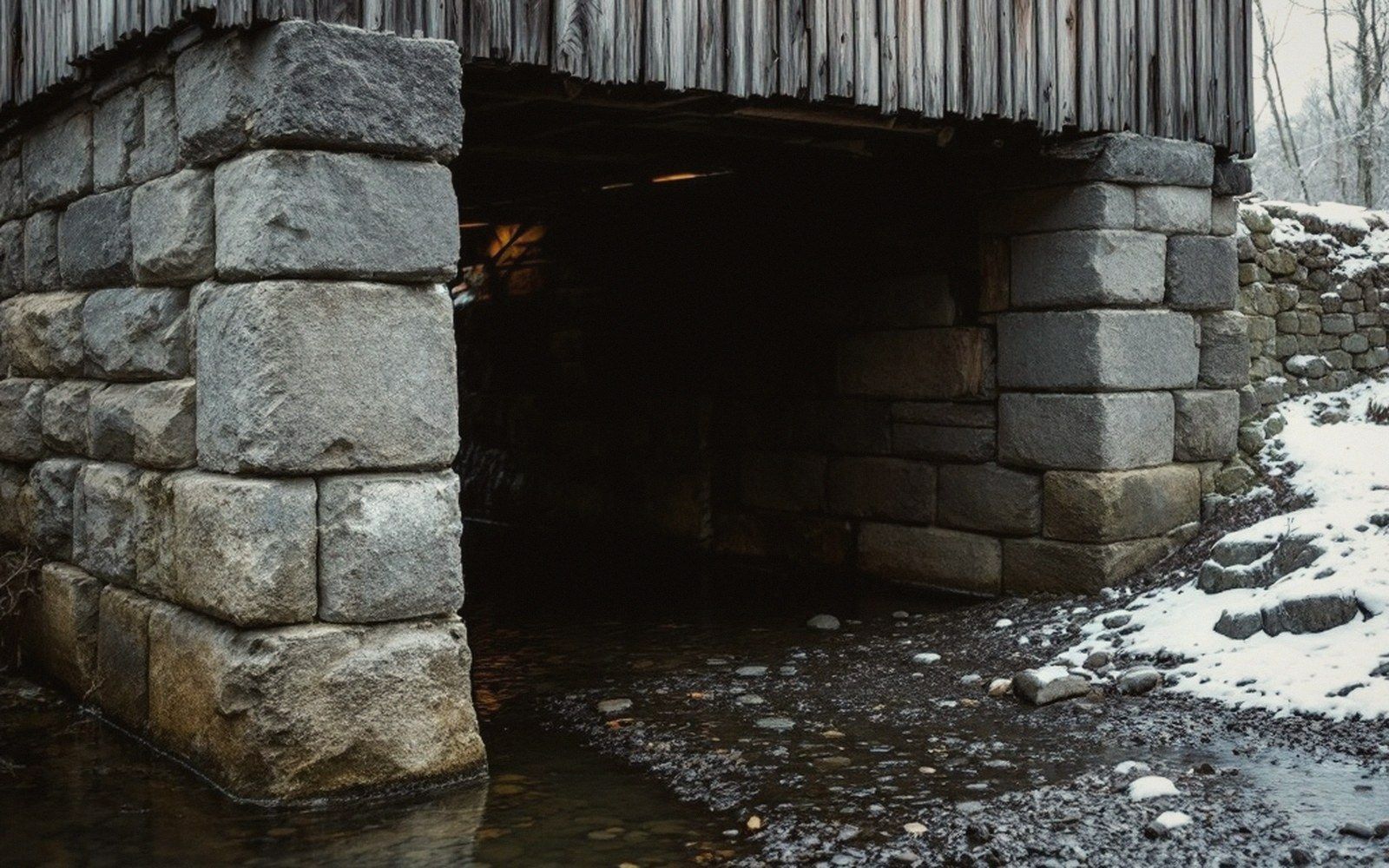
Moisture is the entry point for everything else. An inspector probes the ends of chords and posts with a pick: sound wood resists, decayed wood surrenders. The bearing points where timber meets abutment stone are the first places to check, because water pooling at grade wicks upward and the load concentration there means any section loss matters immediately. The deck surface and the underside of the floor beams get the same attention — anywhere geometry traps water and holds it long enough for fungi to colonize the fibers. A visual check is only a start; the probe tells the truth about what is happening beneath the surface.
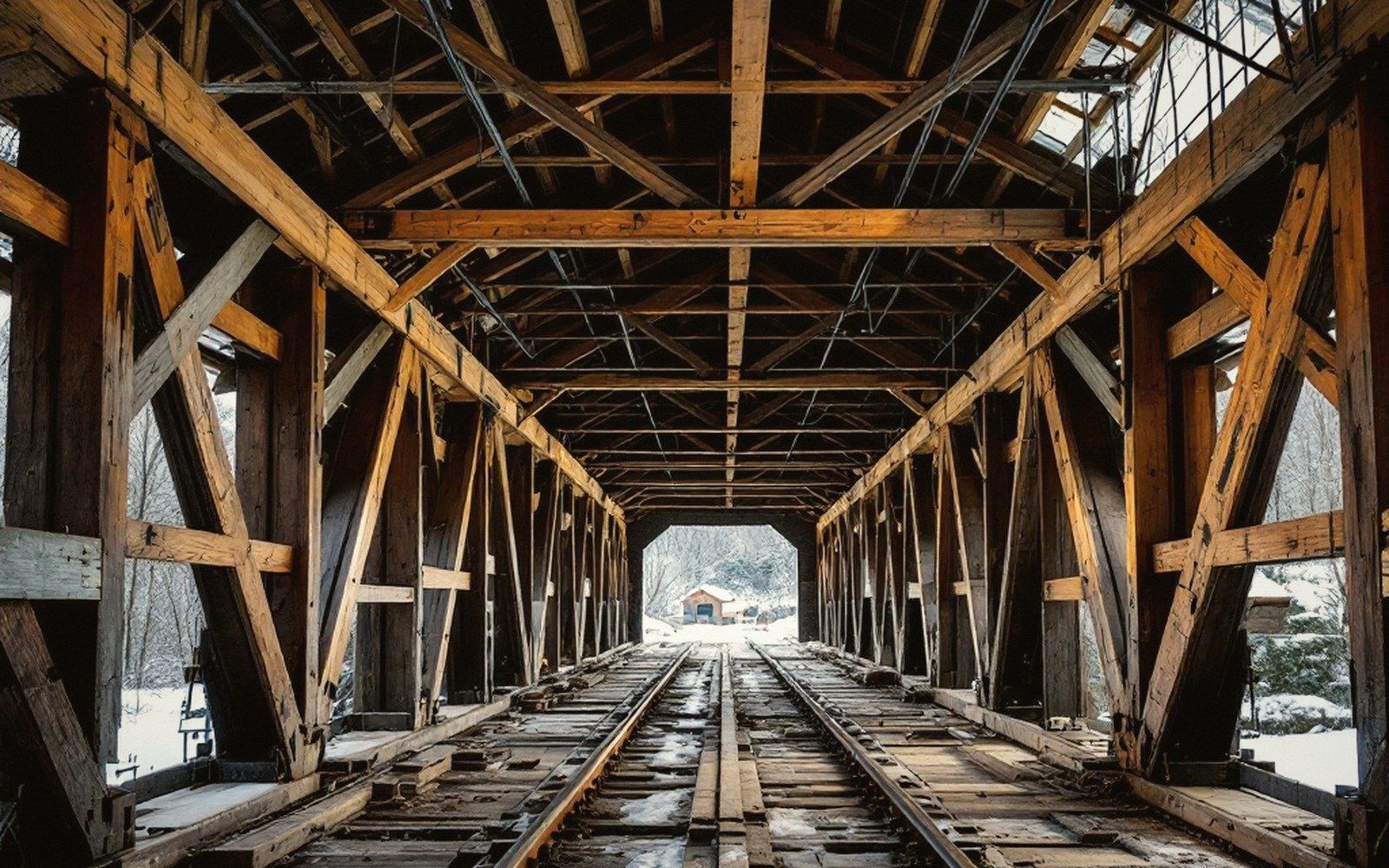
Section loss is the consequence. Decay hollows a member from the inside or eats inward from a wet face, reducing the cross-section that carries load. A chord that looks intact from across the road can be missing a third of its effective area at the bearing. Inspectors measure and record what remains, comparing it against what the original section was supposed to be. The result is not a pass or fail so much as a rate: how fast is the loss progressing, and how much margin is left? That question drives the repair-or-monitor decision.
Connections deserve as much scrutiny as the members themselves. Treenails — the wooden pegs used in Town lattice and similar framing — can shrink, split, or simply push through softened wood, loosening joints that were tight for a century. Iron hardware corrodes, and the corrosion expands, splitting the timber around it. A joint that has shifted even slightly shows in the geometry: a slight bow in a chord, a gap where planks once bore flush. Inspectors look for exactly these signs before they look for the fasteners themselves.
Connections deserve as much scrutiny as the members themselves.
The roof and siding are not structural, but they drive the inspection schedule. A gap in the roofing lets water run down a vertical post; missing siding exposes the truss to driven rain. What looks like a maintenance question is actually a structural one, because a roof is a maintenance decision made about the timber beneath it.
A good inspection produces not a moment's verdict but a record: measured sections, probe results, photographic evidence, and a comparison with the last visit. That accumulation — unglamorous, repetitive, essential — is what tells a county whether it has years or months before a repair becomes unavoidable.
Dry Timber is an independent publication about covered-bridge engineering. It is not a visitors bureau, tourism body, or preservation society.
More in Keeping Them
Repair, replacement and what counts as the same bridge.