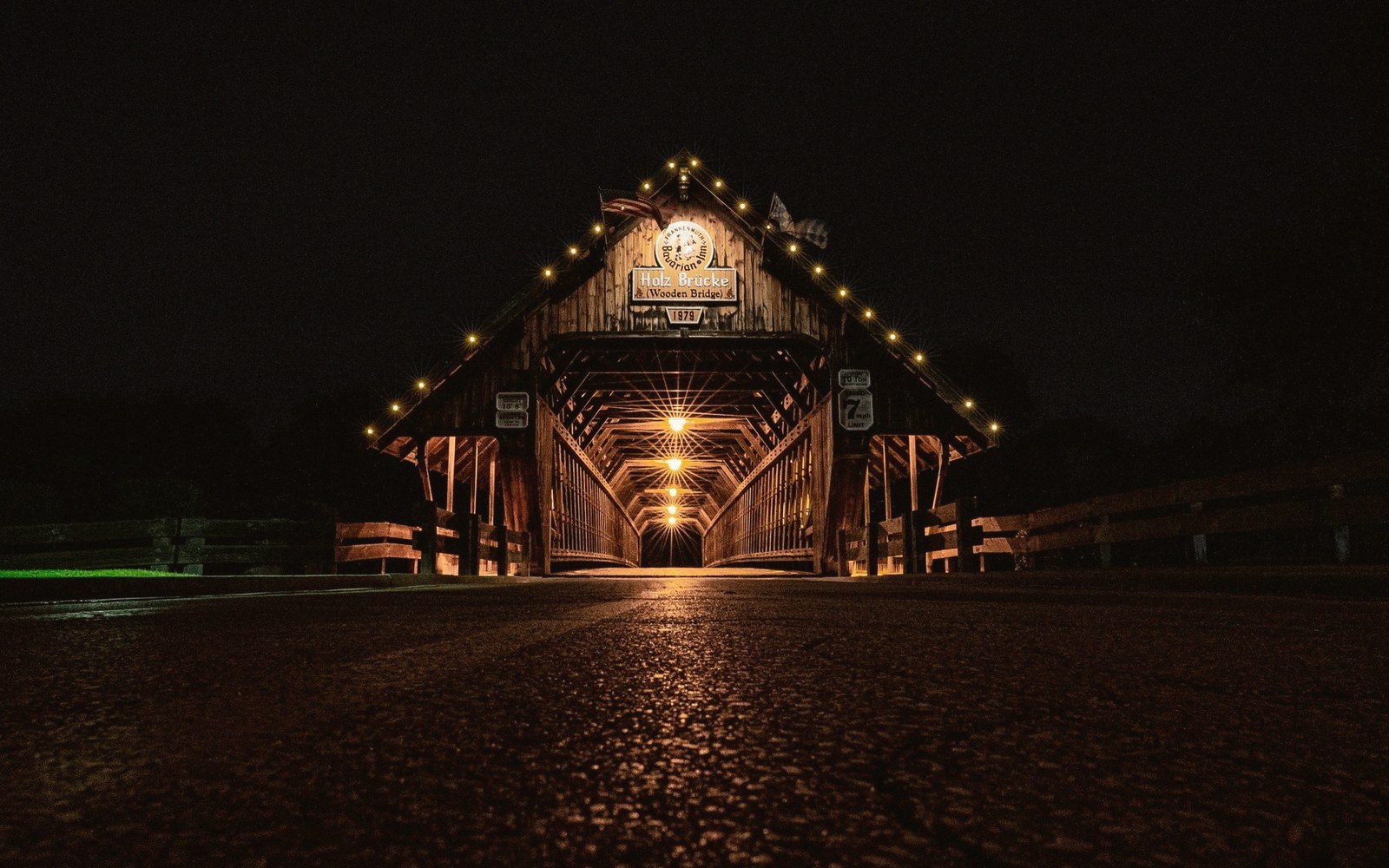
The Portal
The opening that defines the bridge — and takes the beating
The opening at each end sets the clearance and takes the damage. Why it is the most-repaired part of the structure.
Every covered bridge announces itself through a frame: two vertical boards closing in from the sides, a header across the top, and a precise rectangle of daylight beyond. That opening is the portal, and it does two things simultaneously. It tells a driver whether the vehicle will fit, and it absorbs every collision from one that doesn't.
The clearance is set when the bridge is built and rarely changed afterward. Historically that rectangle was sized for a loaded hay wagon — a width somewhere around twelve feet, a height that cleared the load with a little margin. Modern vehicles frequently test that margin. Farm equipment, recreational vehicles, and delivery trucks have all found portals the hard way, and the evidence accumulates in splintered header boards and notched corner posts that tell the whole history of a bridge's traffic without a word of documentation.
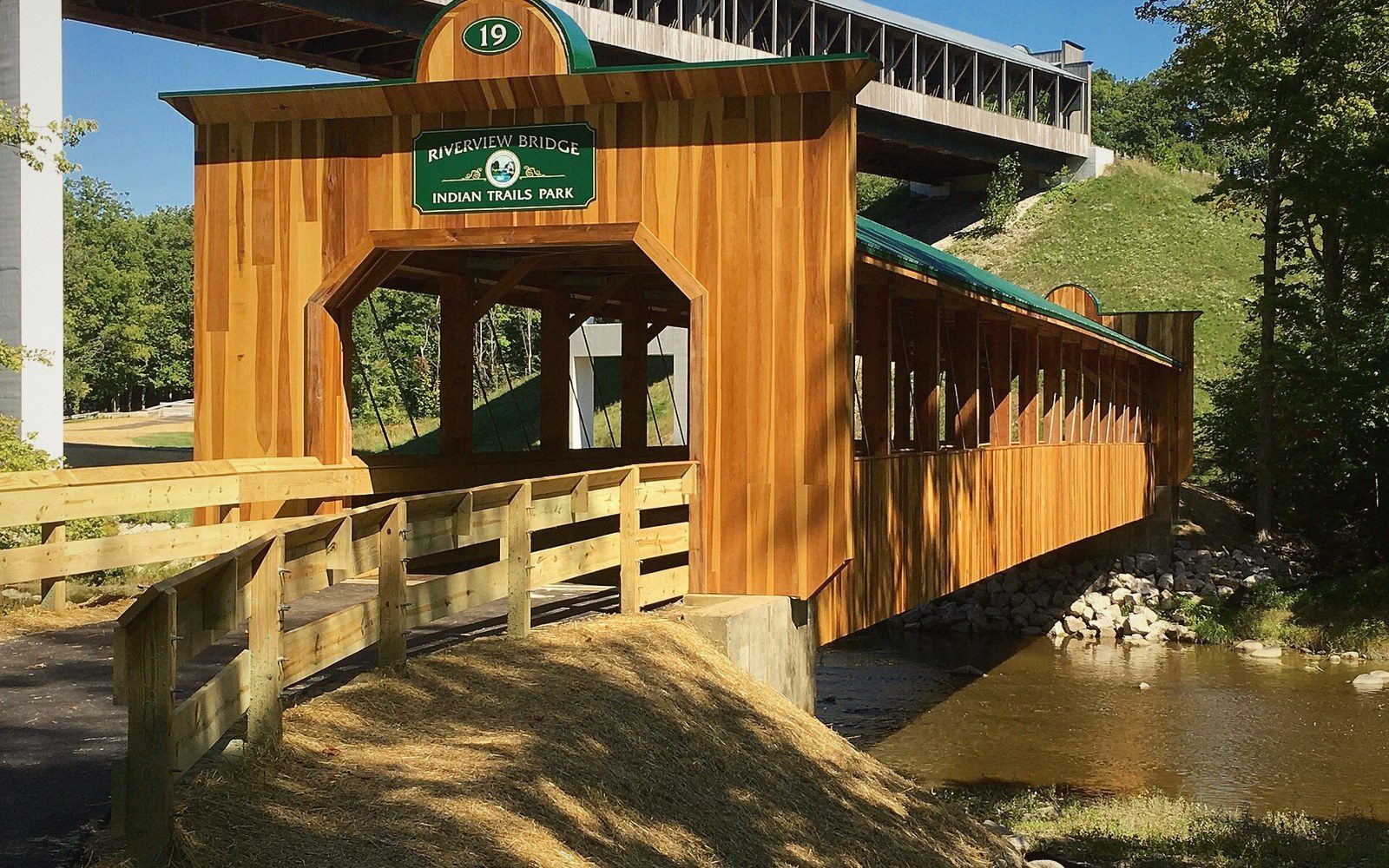
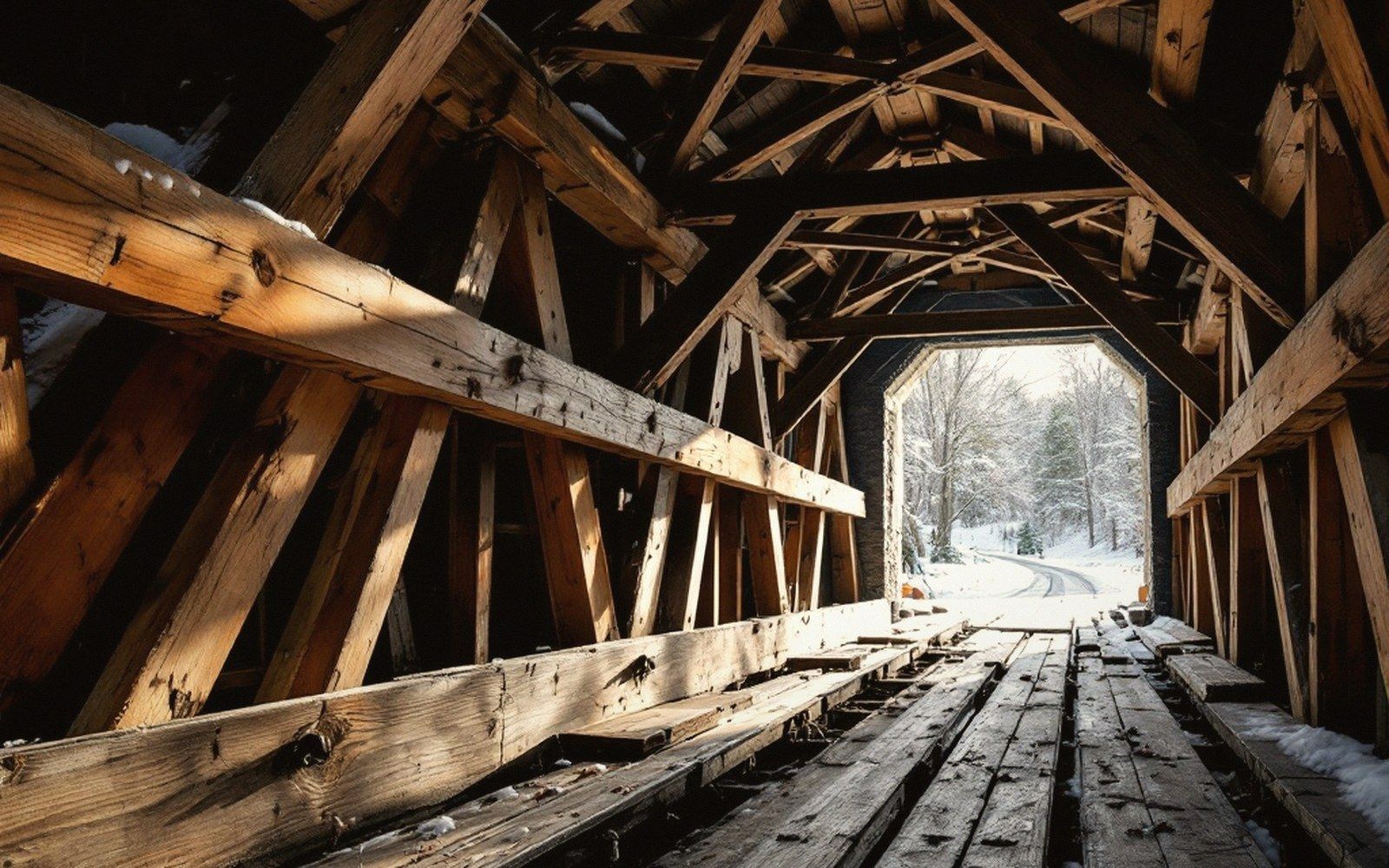
Structurally, the portal frame is the transition point between the enclosed truss and the open air. The vertical members — portal posts — are not primary load-bearing elements the way a chord or a diagonal is; the truss is the bridge, and the portal is essentially its face. But the posts do brace the end of the structure laterally, tie the bottom chord to the sill, and help stiffen the portal against the racking forces that come with impact. When a post is sheared by a truck mirror or a corner is knocked askew, that lateral connection is compromised.
Because the portal projects outward — or at minimum sits flush with the end of the deck — it also catches weather that the roof and siding largely deflect elsewhere. Rain drives directly at the end grain of header boards. Snow packs against the sill. The joint where a portal post meets the deck is one of the first places moisture finds its way in and stays, which is why bearing points and chord ends rot before the middle of a span does. The portal is, in this sense, a summary of every vulnerability timber has.
When a post is sheared by a truck mirror or a corner is knocked askew, that lateral connection is compromised.
Repairs here are correspondingly frequent. A new header board is a morning's work; a new post is longer; a full portal rebuild — squaring the frame, checking the sill condition, matching original stock dimensions — is the kind of job that tends to reveal additional problems underneath. Many bridges carry multiple generations of portal lumber, the oldest well inside the structure, the outermost boards replaced within living memory.
That rectangle of daylight reads as an invitation. In engineering terms it is the most-struck, most-weathered, most-repaired part of the whole structure — which is precisely why it looks the way it does.
Dry Timber is an independent publication about covered-bridge engineering. It is not a visitors bureau, tourism body, or preservation society.
More in The Roof
Why it is there, and what it is protecting.