What Fails First
The failure is almost always wet before it is weak
Bearing points, the ends of chords, and anywhere water sits. Decay follows moisture, not age.
Timber does not decay uniformly. It decays where moisture dwells — and in a covered bridge, that map is predictable before the first crack appears.
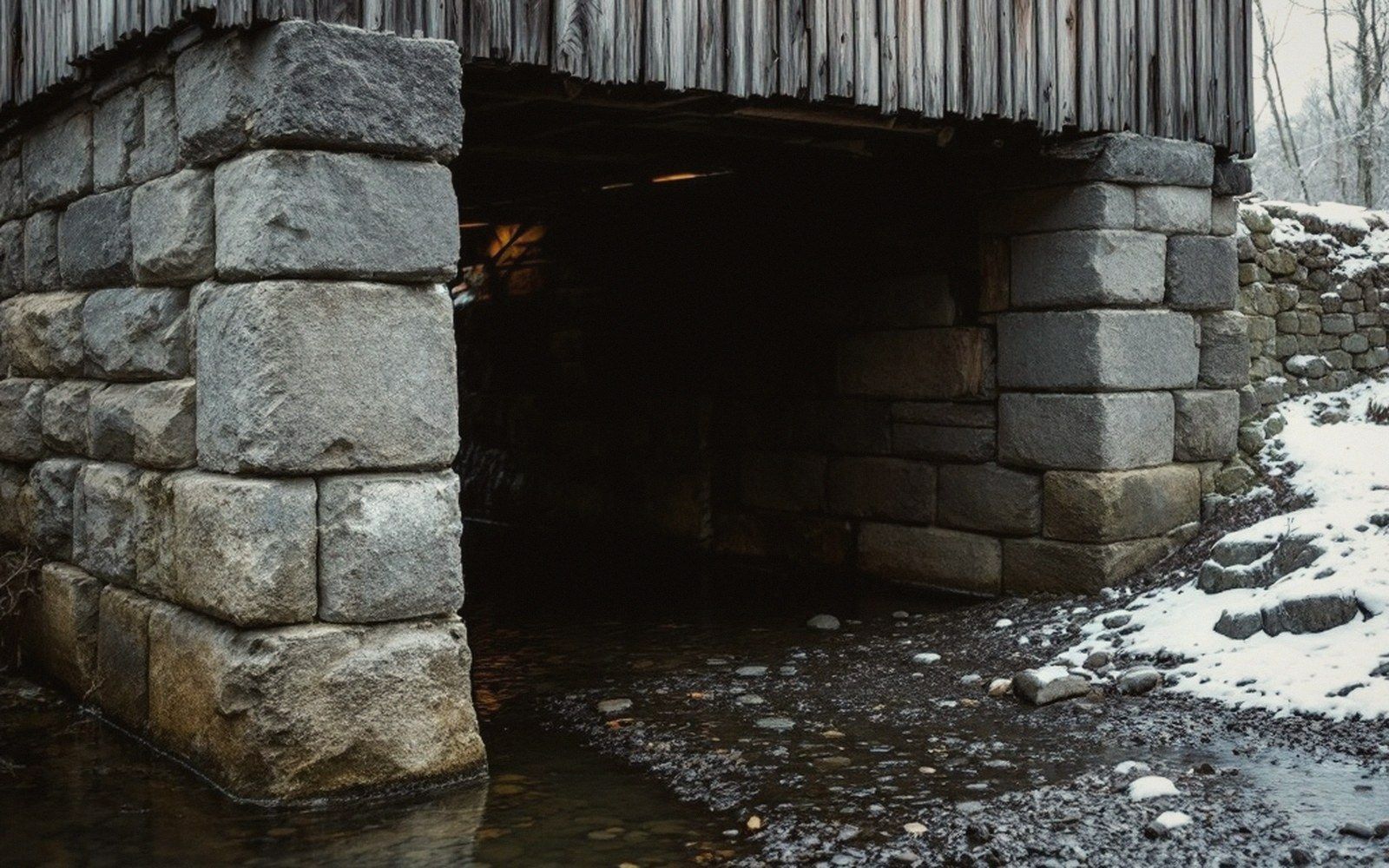
The most vulnerable points are the bearing ends: the spots where a chord or a major member rests on a stone abutment or a wooden sill. End grain is exposed there. End grain drinks water faster than face grain and dries far more slowly. A horizontal surface at the base of a portal wall, a sill in contact with masonry, a chord end tucked just inside where splash from passing vehicles reaches it — these are where rot concentrates.
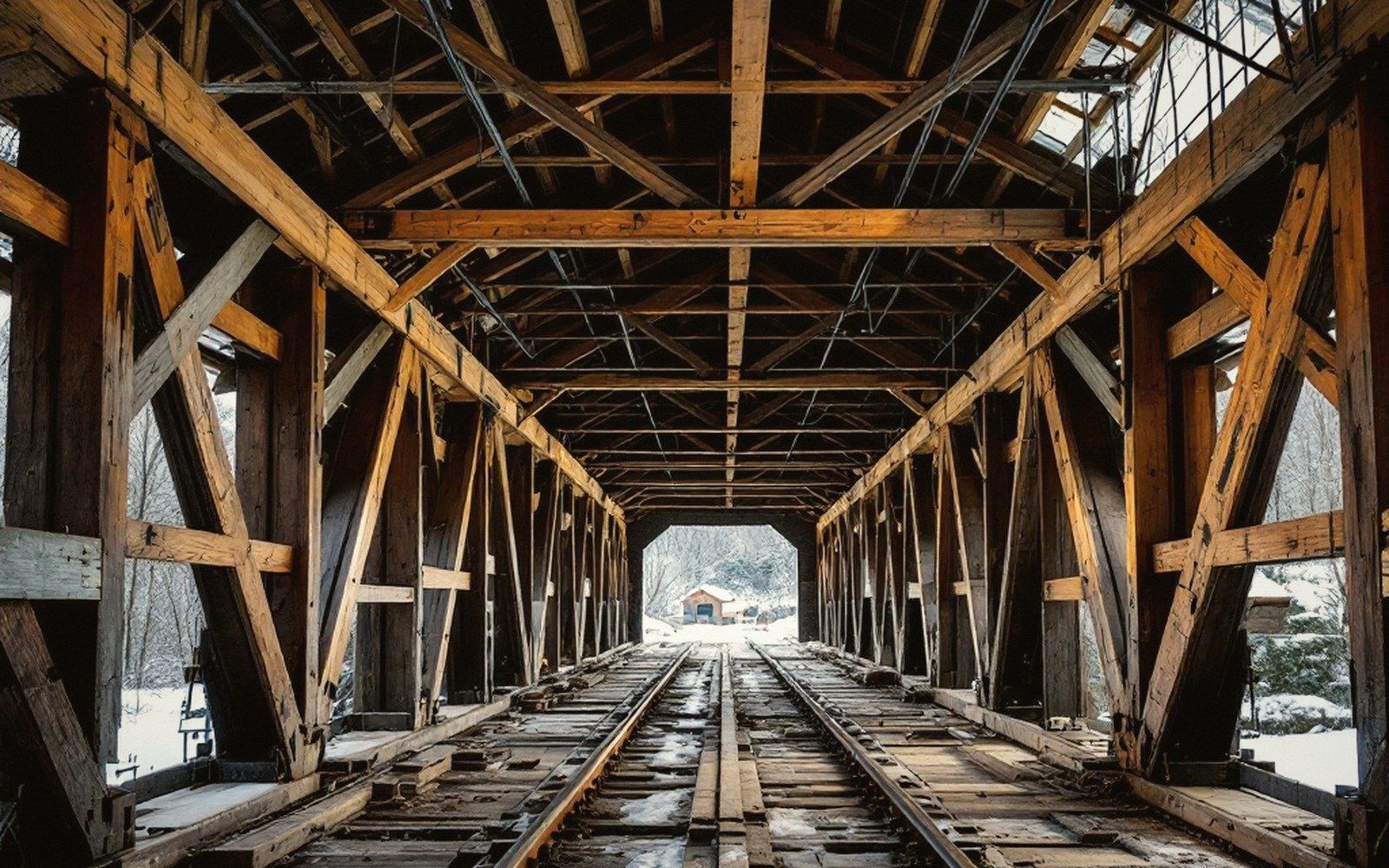
The ends of the lower chords are particularly telling. They sit low, near the deck, close to the abutment, and in the path of water that has tracked down through the structure. By the time surface discoloration is visible, section loss is often already significant inside the member. An inspector probing with an awl is looking for that hidden softness before the visual signs fully arrive.
Connections compound the problem. Anywhere two members meet and create a horizontal or near-horizontal pocket — a mortise that retains water, a bearing plate that traps debris, a bolted splice where the nut seats against the timber — the wood stays wetter longer than the surrounding members. The iron hardware corrodes, expands slightly, and opens the wood around it. The wood takes in more water. The cycle accelerates.
An inspector probing with an awl is looking for that hidden softness before the visual signs fully arrive.
Upper chord ends and roof framing are less immediately at risk, but failed roof cladding changes that fast. Water that enters through a split shingle or a failed ridge seam arrives at the top chord and works downward through the structure, finding every pocket and joint on the way.
Decay follows moisture, not age. A bridge built a century ago with intact roof and well-drained bearing points can be structurally sound; a newer structure with a failed drip edge above a chord end may be rotting actively. The roof is not decoration — a roof is a maintenance decision, and what fails first tells you whether that decision has been kept.
Dry Timber is an independent publication about covered-bridge engineering. It is not a visitors bureau, tourism body, or preservation society.
More in Load
Where the force goes, and what fails first.