A Loaded Wagon Against a Modern Truck
The gap between the load a bridge was built for and the one now crossing it
These were designed for a different traffic. What posting a weight limit is actually doing.
A nineteenth-century covered bridge was designed around what nineteenth-century traffic weighed. A farm wagon loaded with grain, a team of horses, a few pedestrians at once — these were the reference loads, and a competent builder sized his chords and diagonals accordingly. That original design load was modest by any modern standard. A fully loaded semi-trailer can exceed forty tons. The bridge was never meant to see anything like it.
This is not a failure of the old builders. It is simply a gap — between what a structure was engineered for and what the world eventually brought to its doorstep. Posting a weight limit is the formal acknowledgment of that gap.
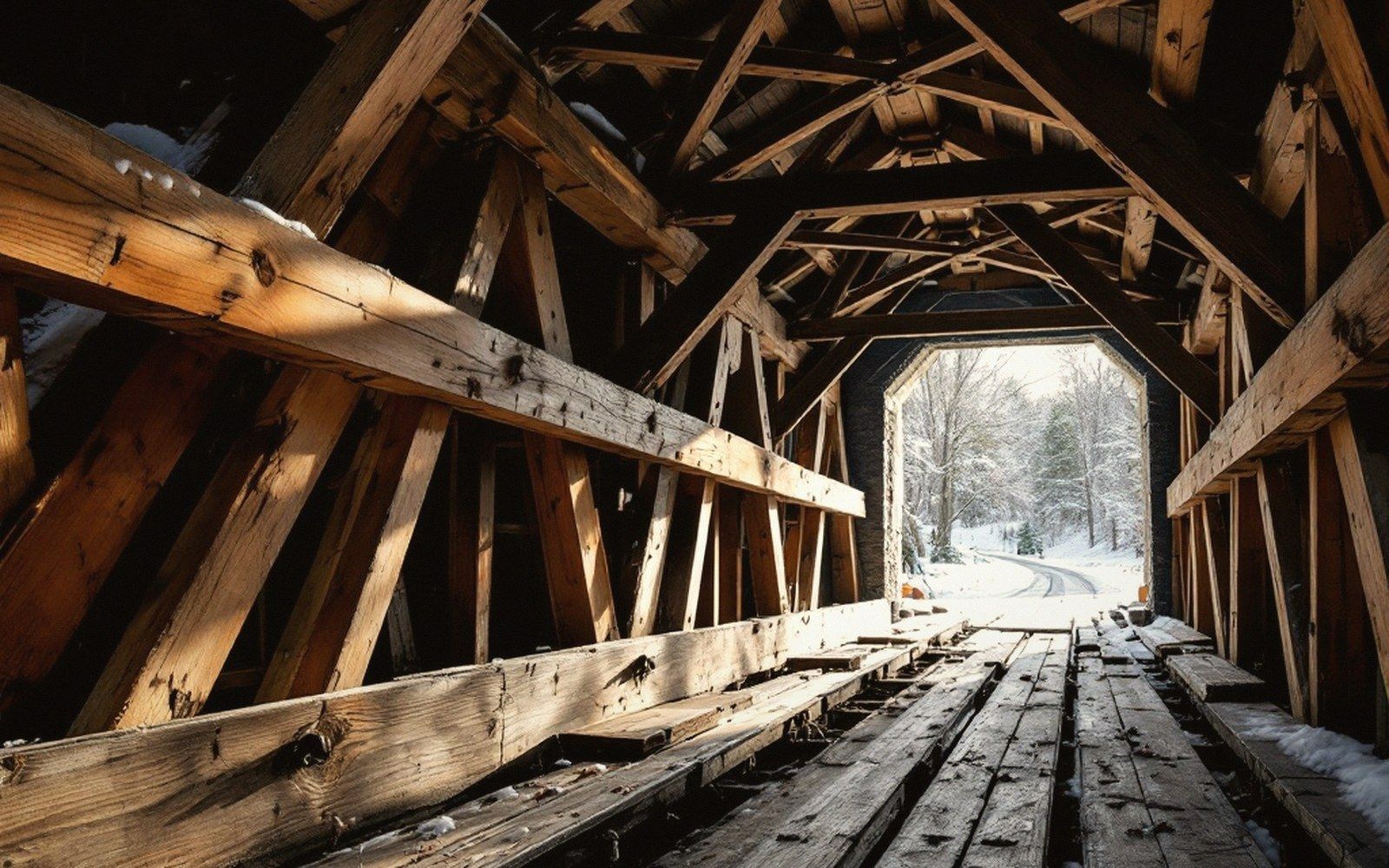
When an engineer posts a covered bridge at, say, six tons, the number is not arbitrary. It comes from an inspection and a structural analysis: measuring the remaining cross-section of load-carrying members, assessing the condition of the bearing points where timber meets abutment, and working backward from the truss geometry to estimate what the weakest element can safely carry today. The posted limit is usually conservative, and deliberately so. Timber that has been in service for a century and a half is not the same timber that went up during the raising — even well-maintained wood accumulates moisture history, small checks, and section loss at the joints.
The limit also reflects the difference between a static load and a dynamic one. A wagon moved slowly. A truck arrives with momentum, brakes on the deck, and sets the whole structure vibrating. Dynamic loading is harder on connections than simple dead weight, and the connections — the treenails, the iron rods, the bearing surfaces — are precisely where deterioration concentrates over time.
A truck arrives with momentum, brakes on the deck, and sets the whole structure vibrating.
In practice, the sign enforces a boundary between the bridge as a working structure and the bridge as a relic of a different traffic regime. Most modern vehicles that need to cross with serious tonnage get routed to a nearby concrete span. What remains for the covered bridge is light passenger cars, the occasional tractor, and the attention of people who stop to read the plaques.
There is a practical irony here: the weight limit, which looks like a restriction, is part of what keeps an old timber structure standing. Keep the loads within what the remaining section can handle, keep the dynamic shocks modest, and the bridge goes on doing the one thing it was always meant to do — carry something across water without getting wet doing it.
Dry Timber is an independent publication about covered-bridge engineering. It is not a visitors bureau, tourism body or preservation society.
More in Load
Where the force goes, and what fails first.