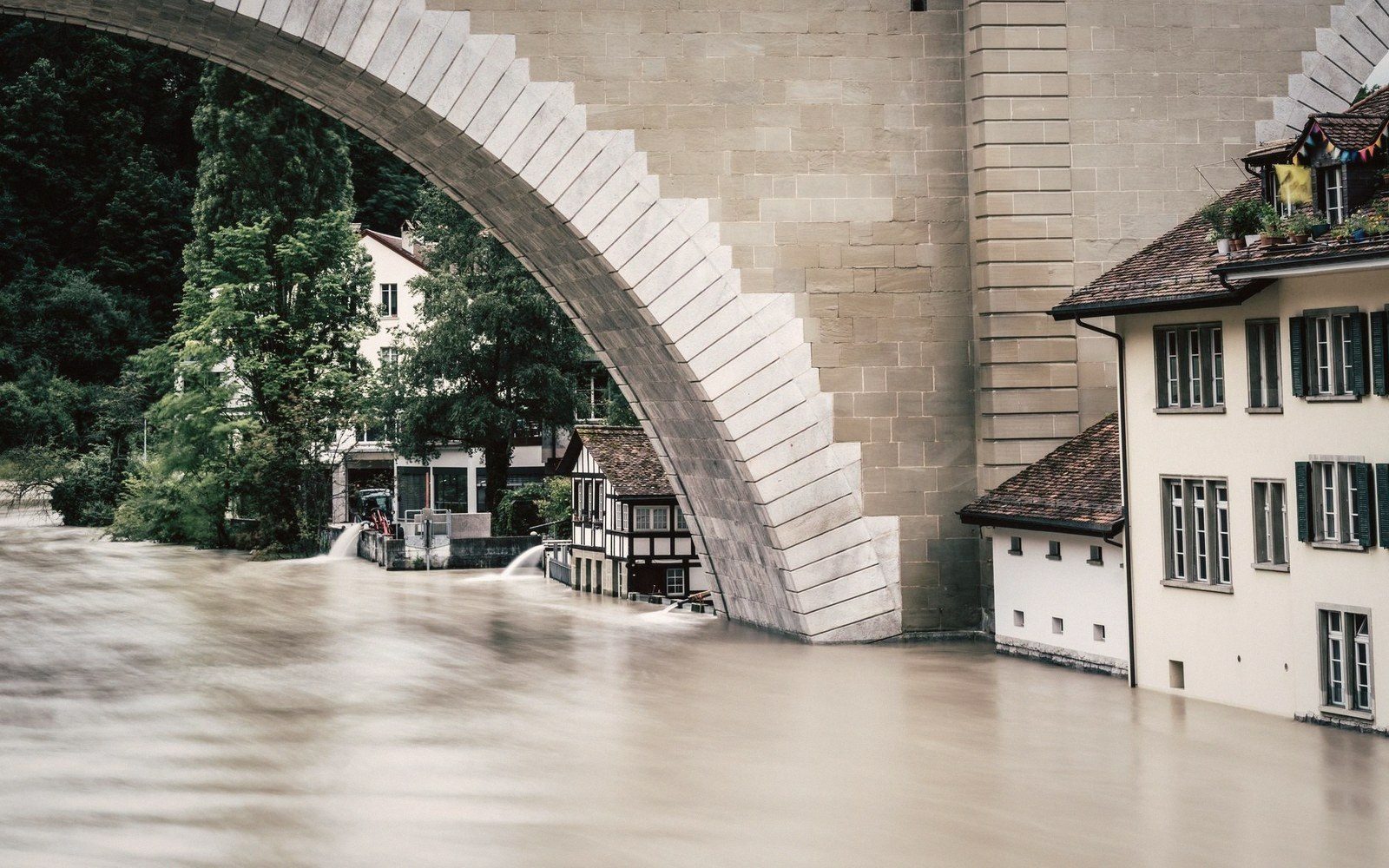
Fire and Flood
The two things that actually destroy covered bridges — and neither is structural failure
The two things that actually destroy them, and why a covered bridge is more likely to leave in a river than to fall down.
A covered bridge rarely collapses. The truss is a redundant system: load redistributes, members sag visibly long before anything breaks, and inspectors catch deterioration before it becomes catastrophe. What actually removes these structures from the landscape is faster and less forgiving — fire, or a river in flood.
Fire is the leading cause of covered-bridge loss. The roof and siding that protect the timber from rain also enclose it in a chimney. Dry air, decades of accumulated dust, and a large surface-area-to-mass ratio in the smaller members mean a bridge can be fully involved in minutes. Arson accounts for a disproportionate share of these losses; a remote rural structure with no sprinkler system and a response time measured in the time it takes a volunteer crew to reach a county road makes an easy target. Once the deck burns through, the trusses follow. There is almost nothing left to repair.
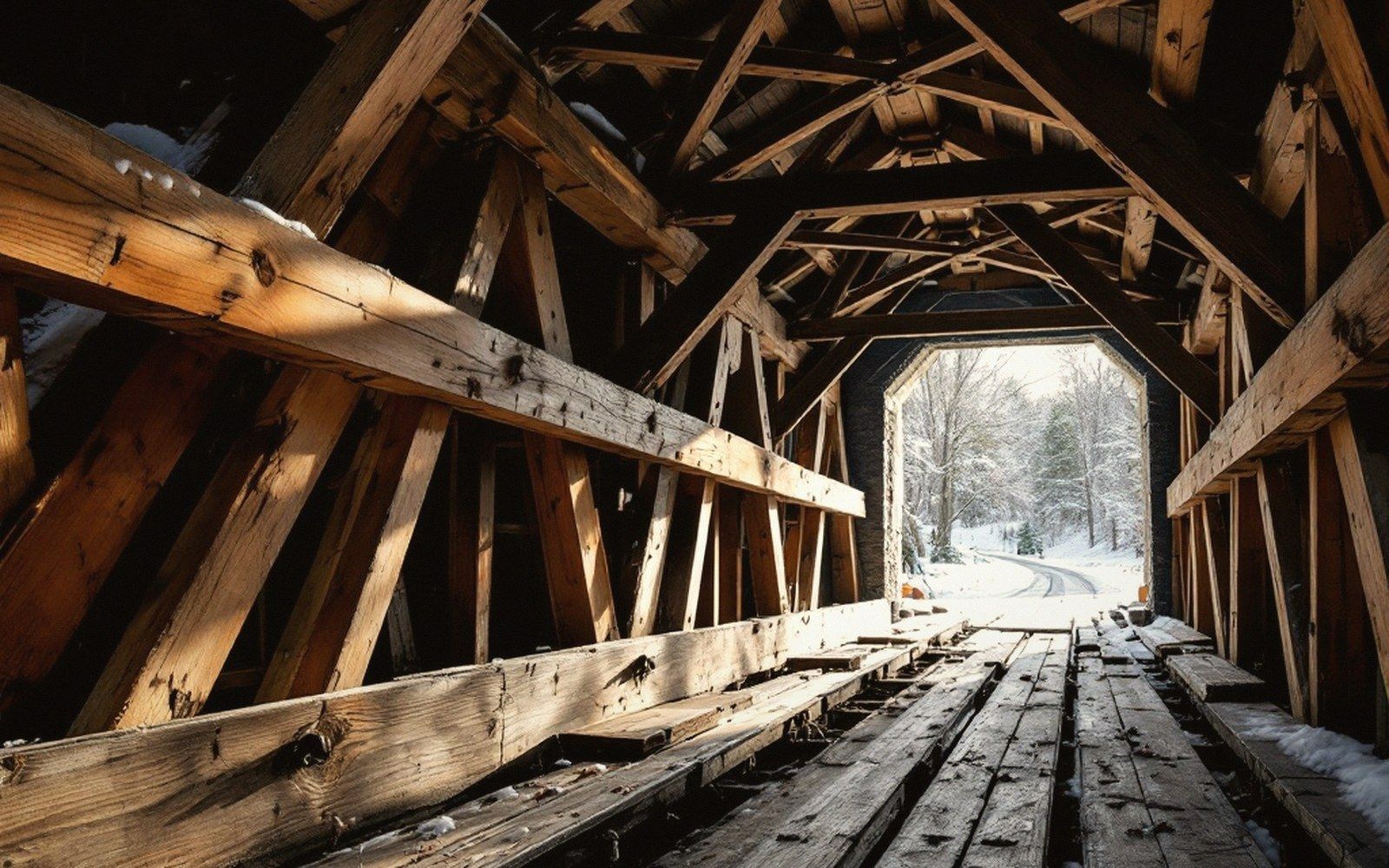
Flood is the second killer, and in some ways the more dramatic one. A covered bridge is, structurally, a timber box sitting on masonry or concrete abutments. The box is not anchored to those abutments in any rigid sense — it rests on them. When a creek becomes a river and a river becomes a wave, the buoyancy and lateral force of moving water can lift the entire span and carry it downstream intact. The structure has not failed; it has simply left. Bridges have been found miles from their crossings, sometimes still largely whole. What fails is the foundation relationship, not the truss.
The irony is visible in the engineering: a roof is a maintenance decision that can extend a timber structure's life by a century, but that same enclosure concentrates fire risk in one long, ventilated tunnel. The siding keeps the rain off the chords; it also keeps the heat in.
Bridges have been found miles from their crossings, sometimes still largely whole.
Neither threat has a structural solution. Fire suppression means detection systems and faster response. Flood mitigation means abutment design and, where budgets allow, positive anchorage. The truss itself — the thing engineers spent the nineteenth century refining — is almost never the reason a covered bridge is gone.
Dry Timber is an independent guide to covered-bridge engineering. It is not a visitors bureau, tourism body, or preservation society.
More in The Roof
Why it is there, and what it is protecting.