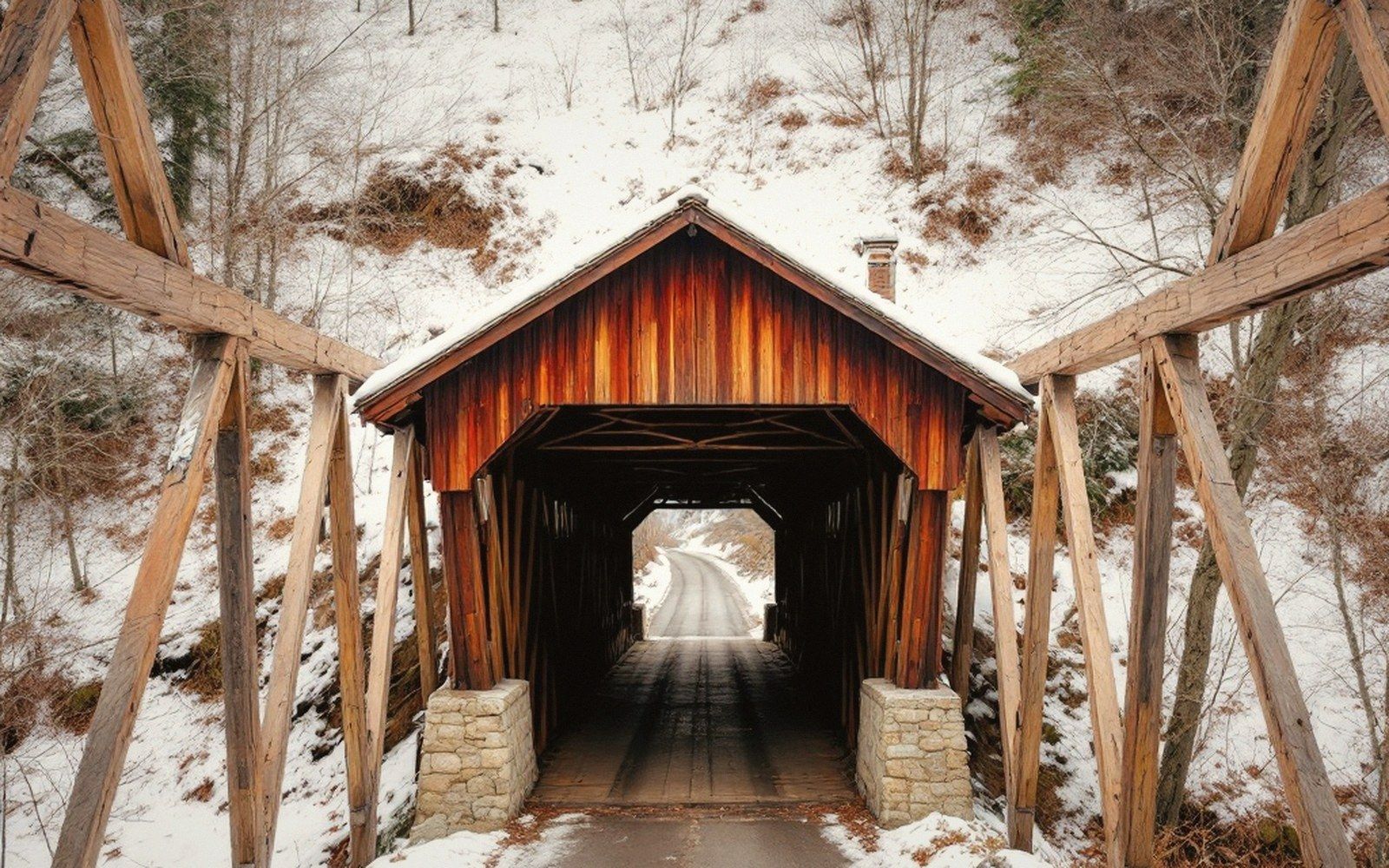
How Much Can Be Replaced
When the Timber Turns Over
If every timber is renewed, is it the same bridge? The question preservation bodies actually have to answer.
Repair a covered bridge long enough and you face a straightforward paradox: the structure standing in the creek may share no original material with the one dedicated a century and a half ago. Every chord spliced, every post sistered, every deck plank swapped compounds the question until it becomes unavoidable. Is it still the same bridge?
Preservation bodies — state historic preservation offices, county engineers, the National Register of Historic Places — have to answer this in writing before a repair contract is signed. The National Register's guidance draws a practical line: a structure retains integrity if its form, workmanship, and feeling survive, even if individual members have been renewed. What matters is that the repairs followed the original geometry, the original truss type, and methods consistent with the period. A Howe truss repaired as a Howe truss, with members of comparable dimension and joinery that respects the original connections, stays a Howe truss. Replace the diagonals in kind, and the record of the repair stays consistent with the original.
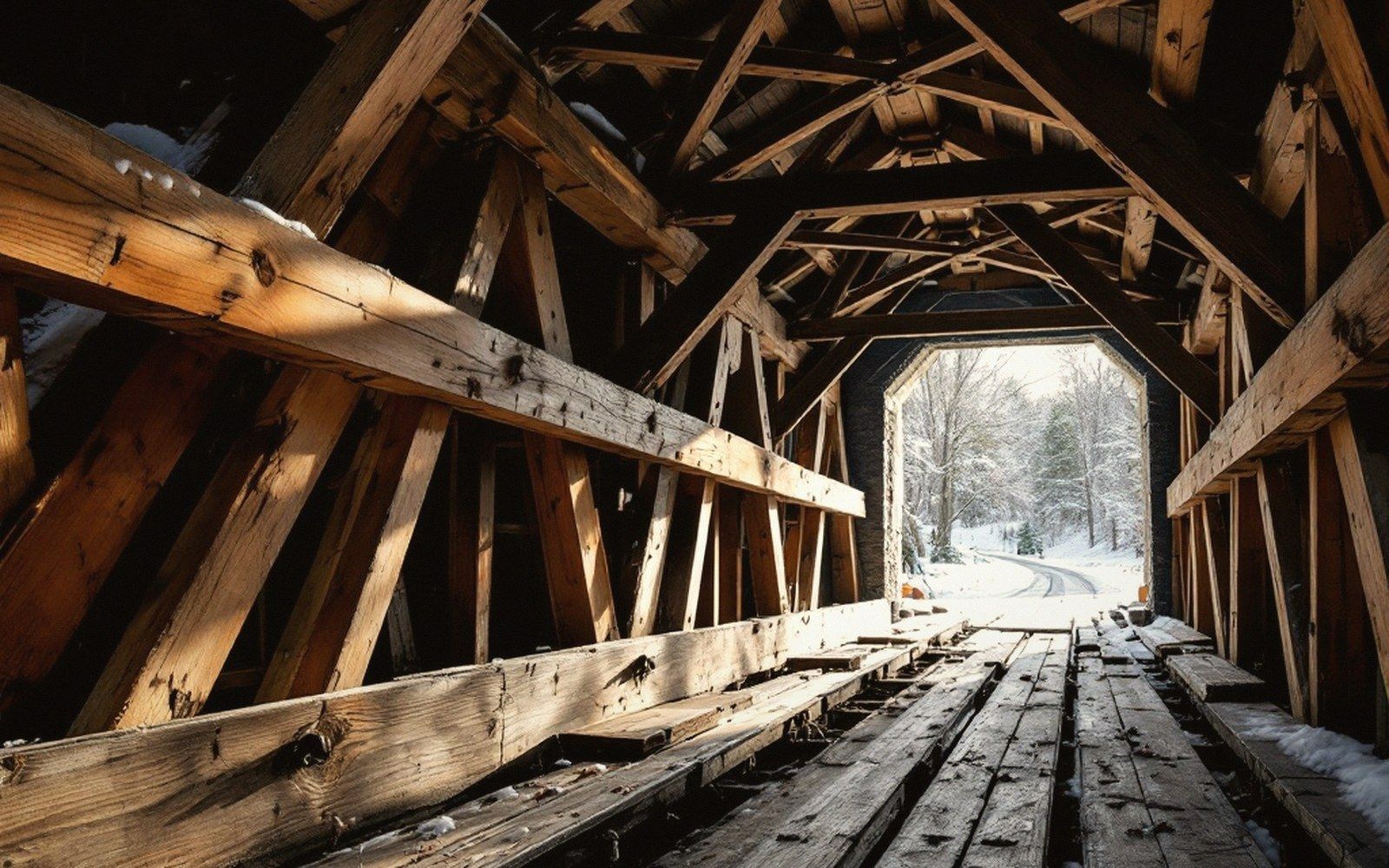
The harder cases are the ones where decay has been comprehensive. A bridge that arrives at rehabilitation with both lower chords gone, the floor system rotted through, and the siding largely absent is effectively a template — the geometry survives in survey drawings, the truss type is known, but the material is almost entirely new. Some of those have been listed or relisted on the National Register anyway, on the grounds that the craft knowledge, the community significance, and the spatial experience of crossing are what the designation is actually protecting.
The philosophical version of this problem has a name — the Ship of Theseus — but working engineers rarely invoke it. What they track is the percentage of original fabric remaining, the degree to which the repair altered the structural logic, and whether the work was documented thoroughly enough that future generations can read the history in the wood. A splice dated in carpenter's pencil, a replaced post marked with the year, a repair log kept in the county engineer's office: these are what let a bridge carry two histories at once without pretending either one away.
The harder cases are the ones where decay has been comprehensive.
The roof and siding protect what is original from becoming what is replaced. That is, finally, the whole argument for keeping them.
Dry Timber is an independent publication about covered-bridge engineering. It is not a visitors bureau, tourism body, or preservation society.
More in Keeping Them
Repair, replacement and what counts as the same bridge.