Repair or Replace
When a fix is still the original bridge — and when it isn't
Sistering a chord, splicing a member, jacking a span. When a repair preserves a bridge and when it quietly produces a new one.
Every timber structure is a slow argument between wood and water. Covered bridges defer that argument for generations, but eventually the inspector finds soft fibre at a bearing point, a chord sagging where it shouldn't, a post that sounds hollow. At that moment, the question isn't whether to act. It's whether the act produces a repaired bridge or a quietly new one.
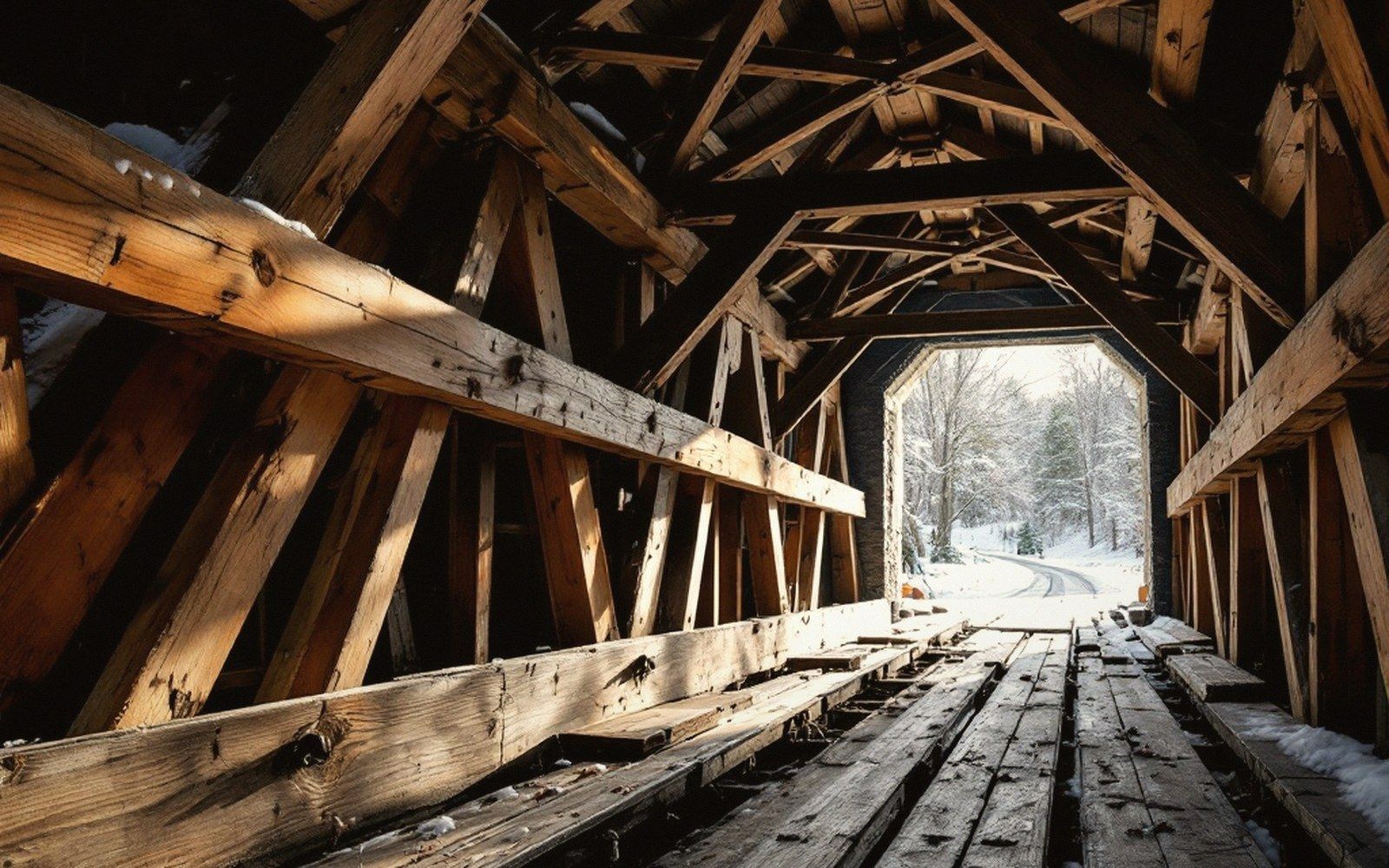
The practical options sit on a spectrum. At the conservative end: sistering, where a new member is bolted alongside a compromised one so the two share load while the original stays in place. The decayed timber isn't removed; it's assisted. The new wood carries the stress, the old wood carries the history. Done well, sistering is nearly invisible from the road and entirely reversible — the sister can be unbolted if a better solution emerges later. It is the preferred intervention wherever the sound material remaining in a member is sufficient to justify keeping it.
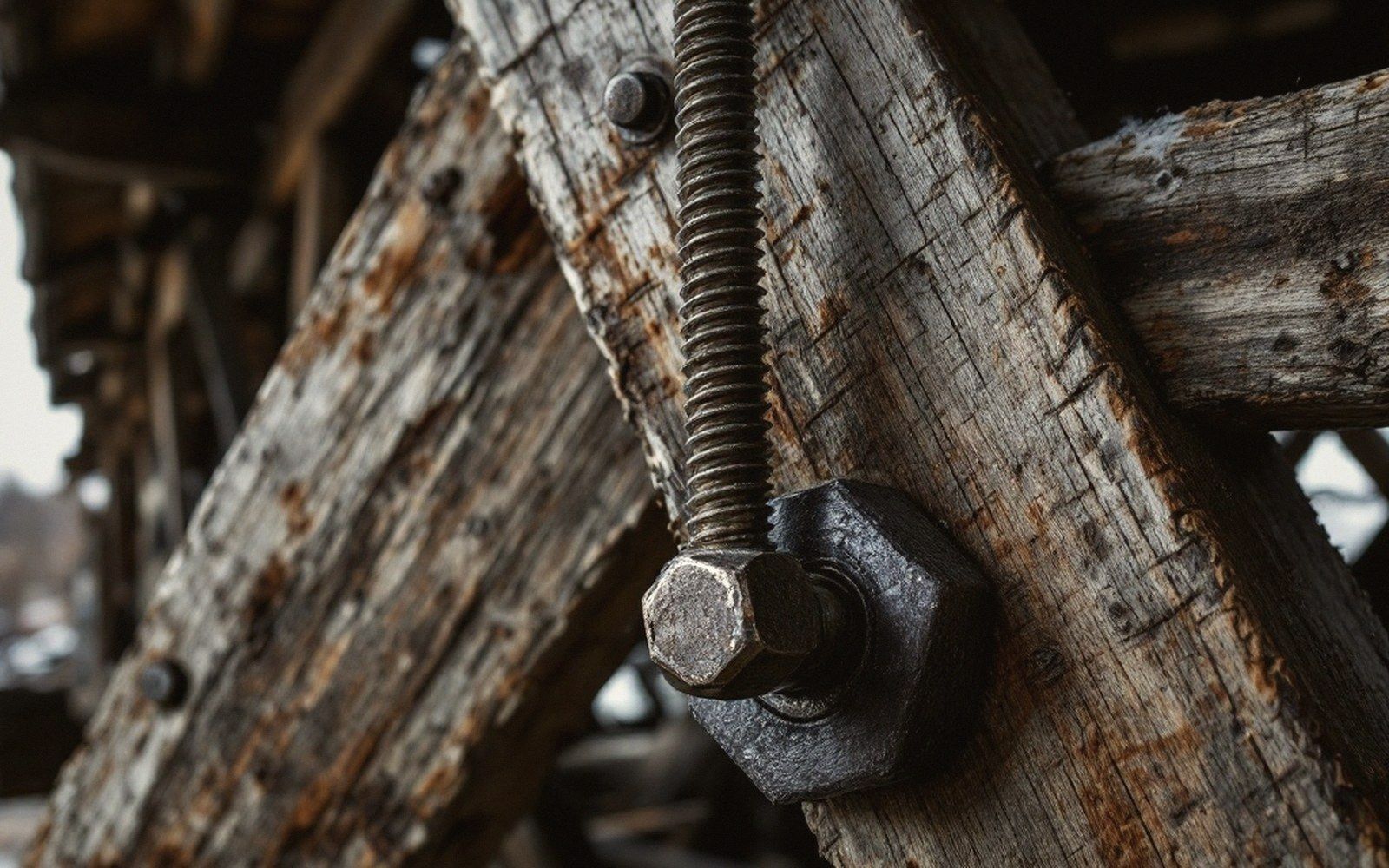
Splicing goes further. A section of a chord or a diagonal is cut out and a new length jointed in, often with steel fishplates or carefully fitted timber scarfs. The member survives as a continuous element; only the failed portion is gone. Splicing demands close attention to the joint geometry, because an imprecise connection introduces eccentricity into what should be a straight load path. Get it right and the repaired member behaves like new. Get it wrong and the splice becomes the next failure point.
At the more drastic end sits full member replacement — pulling a post, a chord, or a set of floor beams entirely and substituting new timber. This is not, in itself, a betrayal of the structure. Bridges were always maintained this way; a working bridge in 1890 was not the timber that left the sawmill in 1870. The question preservation engineers now ask is one of thresholds: how much can be replaced before the bridge's material authenticity is gone in any meaningful sense?
Bridges were always maintained this way; a working bridge in 1890 was not the timber that left the sawmill in 1870.
Jacking complicates everything. Before any major member work, a span is often relieved of load by hydraulic jacks bearing on temporary falsework — essentially the same operation used to install the bridge originally. Jacking lets carpenters work on stressed members without the structure moving on them. It also, briefly, holds the bridge in a geometry that may differ from the geometry the timber has learned over a century of creep and settlement. When the jacks come down, the renewed truss must accept loads through connections that haven't been loaded that way before. The behaviour after a major repair is not always predictable in its first year.
The honest difficulty is that no two decisions are alike. A Burr arch bridge and a Town lattice bridge fail differently, carry load differently, and tolerate intervention differently. A Town lattice distributes stress across dozens of redundant members; losing any one of them matters less than losing a chord in a Howe truss, where the geometry depends on every member doing its assigned job. Redundancy in the original design becomes a kind of forgiveness during repair.
What tips a repair toward replacement is cumulative scope. A single sistered chord is a repair. Sistered chords, spliced diagonals, new floor beams, reset portals, and replaced siding — taken together, they may constitute a new bridge wearing an old bridge's label. Preservation bodies don't agree on where that line sits, and they're right not to pretend they do. The answer depends on what a particular community has decided it is preserving: the physical material, the structural logic, the historical record, or simply a covered bridge that works.
The roof and siding buy time. Sound connections and dry bearing points buy more. But the timer runs regardless, and the decision that shapes a bridge's identity isn't the one made when it was built — it's the one made when the inspector comes back with a bad report and someone has to choose how much of the original to spend.
Dry Timber is an independent publication about covered-bridge engineering. It is not a visitors bureau, tourism body, or preservation society.
More in Keeping Them
Repair, replacement and what counts as the same bridge.